GES295 Liverpool Street Sidings
Some explores begin with months of planning. Others begin with a single message:
“We got into the Liverpool Street sidings. Access was stupidly easy.” That was all the encouragement I needed.
By the time I reached the City, the biggest challenge wasn’t security, alarms, or patrols - it was finding somewhere to park the Vespa. Liverpool Street on a busy evening is chaos walled in by concrete and glass, and after circling for what felt like forever, I finally found a spot and headed for the access point.
The strange thing about urban exploration is that the most obvious entrances are often the ones nobody notices. Hidden in plain sight was a door so brazenly visible it almost became invisible. A quick glance around, a distracted security guard, a fast movement of the hand… and suddenly, London disappeared behind me. The door clunked shut. The muffled sounds of Bishopgate traffic and pedestrians milling about gently penetrated the air, followed by the familiar ritual: torch check, bag adjustment, listen carefully.
Ahead of me was what appeared to be the upper section of a ventilation shaft - a forgotten utility space stained with decades of dust, soot, and Underground grime.
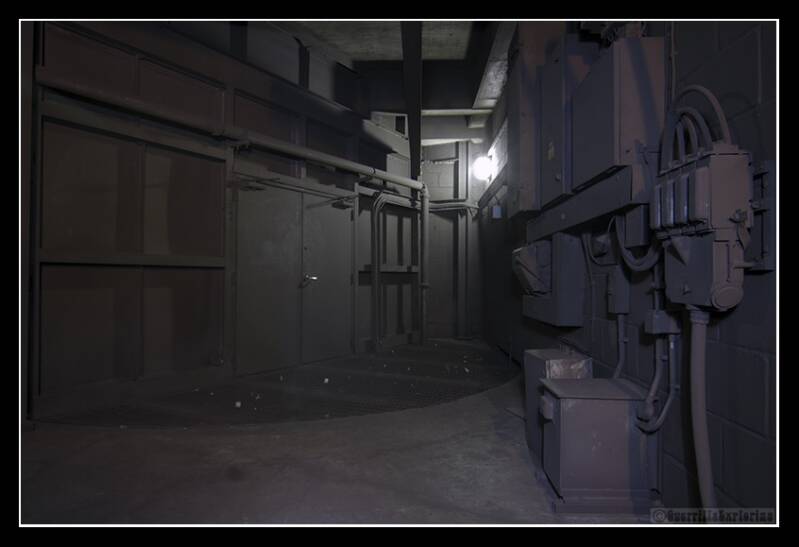
At the far end stood a pair of heavy doors, once painted bright yellow but now dulled into that unmistakable Underground grey-black coating that seems to cling to everything below the city. Not really! Beyond them was a staircase descending into the sidings. I’d heard stories about workers appearing down here without warning, so every step was cautious. Exploring alone sharpens your senses in strange ways. Every creak matters. Every distant metallic knock raises questions. Was that tunnel noise… or footsteps?
One of the first things I tell newer explorers is this: "Explore with your ears as much as your eyes." Because underground, sound travels differently. Sometimes you hear people long before you see them.
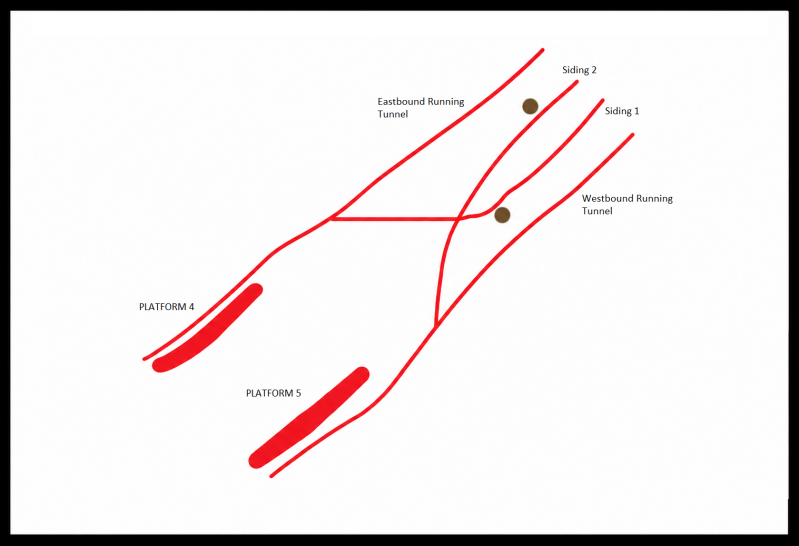
Below is a rough sketch of the tunnel layout. The black dots mark roughly where the photos further down were taken.
The stairs finally spilled out into a passage by the sidings themselves. Immediately, the atmosphere changed. The air was warmer. Heavy with brake dust. The walls curved away into darkness while the distant rumble of trains echoed through the tunnels like rolling thunder.
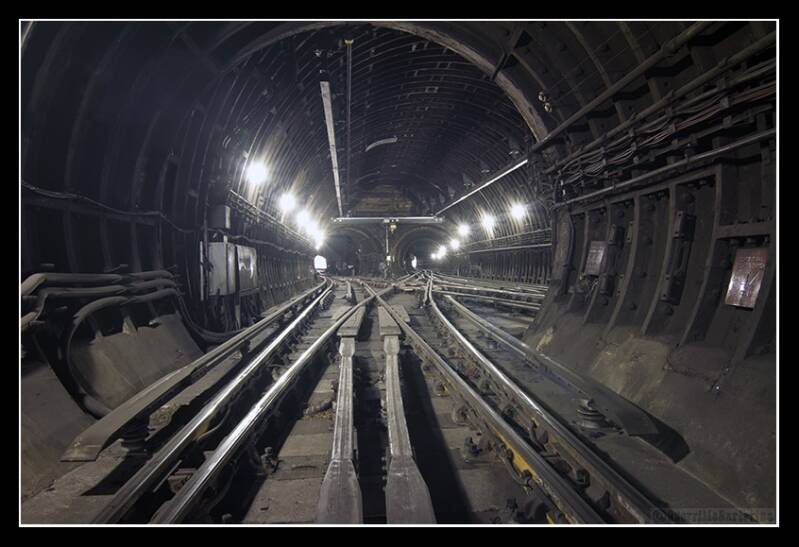
One of the siding tunnels stretched ahead of me, disappearing into dim amber lighting. Somewhere beyond the walls, Central line trains were still carrying passengers through Liverpool Street station, completely unaware of the hidden spaces sitting just metres away. As I set up and took this photo, I noticed a figure in the distance wearing an orange vest trying to look into the tunnel. I figured it was time to move back into the tunnel and out of sight of the platforms.
Standing down there felt oddly surreal. Above ground, Liverpool Street is one of London’s busiest transport hubs - packed with commuters, coffee cups, departure boards, and endless motion. Yet underneath all of that sits this silent service world of concrete, steel, and forgotten infrastructure. Further in, the second tunnel opened up into a darker stretch of track. The live running tunnel sat beyond the wall to the right. Every so often, the structure vibrated faintly as another train thundered past nearby.
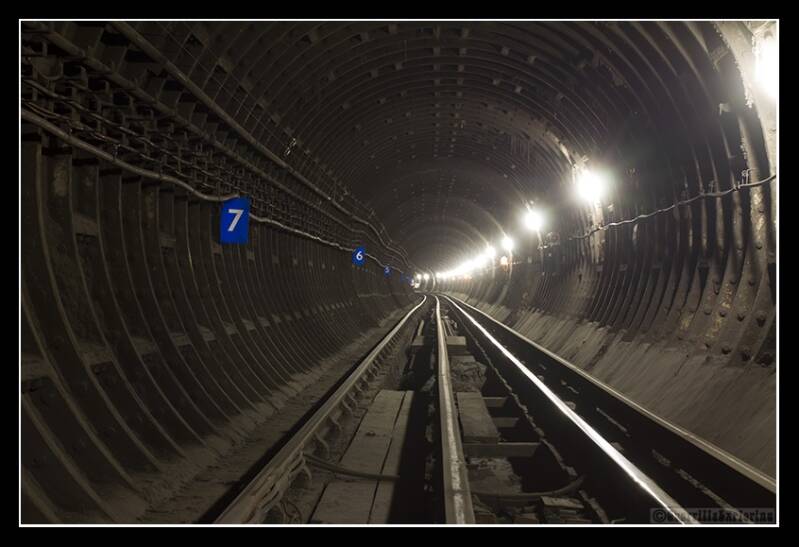
There wasn’t a huge amount to explore physically - these were operational sidings rather than abandoned platforms or sprawling hidden stations - but atmosphere counts for a lot underground. The constant awareness that trains were still running nearby gave the whole place an edge. I also had no idea whether trains were stabled here overnight, or if workers might suddenly appear around the bend. Urban exploration is often about balancing curiosity with common sense, and this felt like one of those places where overstaying your welcome would end very badly.
There’s a particular kind of tension that comes with operational Underground infrastructure. Not abandoned. Not forgotten. Active. Alive. Somewhere above and around me, workers, CCTV, and moving trains continued their routines completely unaware that someone was creeping through the darkness beneath them.
So after soaking in the tunnels for a while, I decided to call it quits. The final photo below looks back toward the entrance to the sidings. The staircase leading back to the surface sits in the background - the route back to normal London.
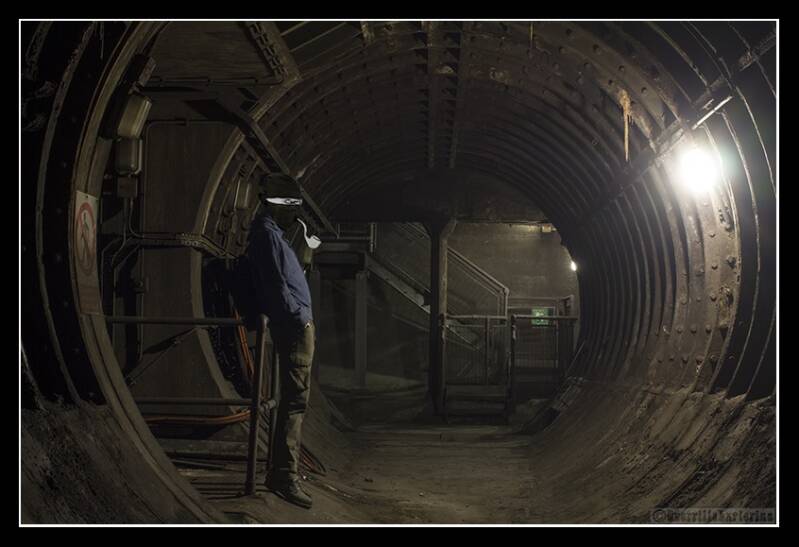
And just like that, the explore was over. One final look back into the tunnel, one last listen for footsteps, then back through the door and into the noise of the city as though none of it had happened at all. A short one. Maybe half an hour to 45mins underground in total. But sometimes the smaller explores are the most memorable. There’s something fascinating about slipping unnoticed beneath one of the busiest stations in Britain and discovering the hidden machinery quietly keeping the Underground moving.
Props to whoever originally tipped me off about this place. This explore was actually done years ago - around 2018 - and unfortunately, I’ve long forgotten who passed on the information.
Still, cheers whoever you were. For one evening at least, Liverpool Street revealed a hidden side most people will never know exists.
Add comment
Comments